
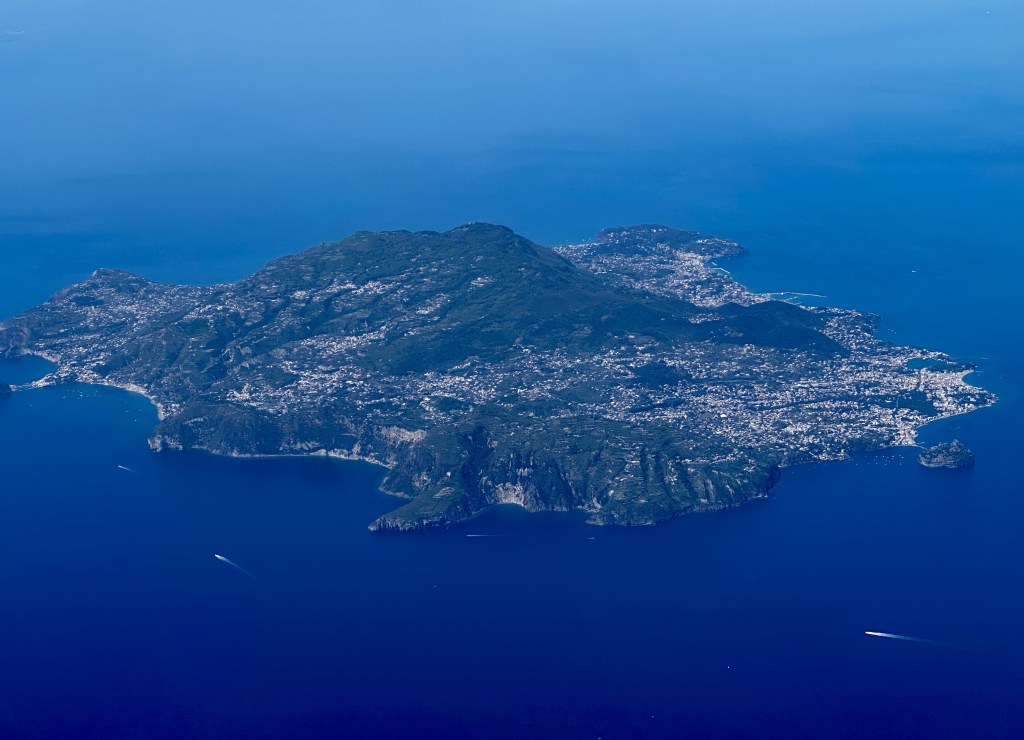
An Italian friend of mine from Lake Como reminded me emphatically, that “Napoli isn’t Italy.” We had a good laugh about it, and yet I still wondered, just how different could it be? I had known that Italy is divided into three parts, northern, central, and southern, but it wasn’t as if the country was as big as the United States, with all its diversity, for example. Well come to find out the distinction was just as diverse as America’s “southern culture,” is to the northern, “New Englanders.” As unmistakable as New Yorkers are to their closest surrounding states.
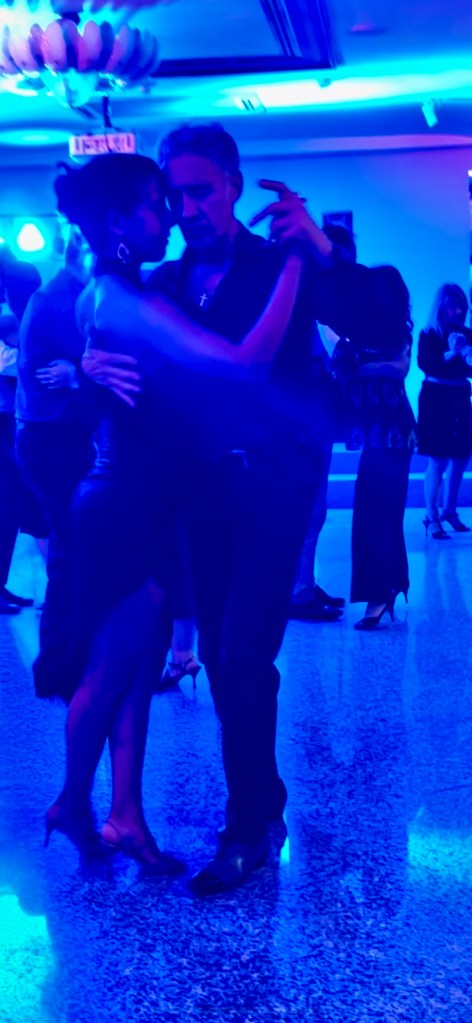
If you’ve read my blog, Turkey: My Love Affair with Tango and Baklava, then you’ll know that besides loving to indulge my senses in really great ethnic sweets, I love luxuriating my spirit dancing Argentine tango. While living in Mallorca, my partner–in–dancing–crime, bestie and I, are groupies to the two milongas offered each week. Sometimes though, we feel the pull to hit a new tango floor, lose ourselves amid new sensory strands. Lucky for us tangueros, there are Argentine Tango Festivals throughout the year all over Europe. She and I had both agreed that this year we would take advantage, find a festival somewhere, and have a tango adventure. Luckier for us, Palma is a great international airport hub, and in just two hours we can be almost anywhere in western Europe.
It happened something like this: We had just finished a big hike towards Cala Tuent and were sipping on our bevvies, gazing out onto the view. So, are we actually gonna book a festival or what? I pull out my phone and start scrolling the website of close to a hundred options.
“Italy?”
“Italy,” she replies emphatically.
I read on…“Roma…” We both shook our head, having already been to the city. “Ooh, this one seems to be on an island,” I gushed. “Iiisckia,” I tried pronouncing for the first time. The info was all in Italian, so I google translated. “Enjoy refined quarters,” I read the blurb aloud, emphasizing each time I came to an exciting adjective, “in a spa hotel with sumptuous dining and a piano bar. After a day of workshops by our tango masters, lavish your body in the healing thermal pools. Indulge in voluptuous Italian buffet dinners and finish with social dancing at the nightly milongas beneath the stars.” Our bellies tingled with excitement.
“Say less.” My friend was already pulling up flights. “Ryan Air, 2 hours direct,” she could barely get her words out between a 10pt smile, “60 euros roundtrip.”
With weeks immersed in finessing the last edit on my novel, I barely had time for researching our upcoming trip. I just had dancing on the brain. On the 6am flight above the clouds, Napoli was an afterthought. Luckily, we had given ourselves 24hrs to discover the city before catching the morning ferry to Ischia. Our first adventure would be Pompeii.
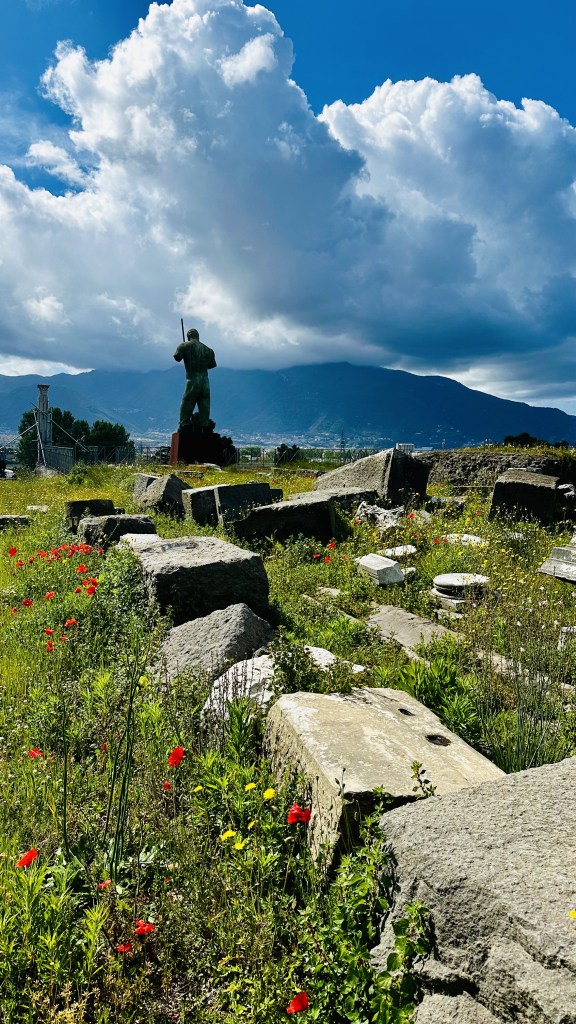
After a 45-minute train ride to the ruins, we delighted in our breakfast picnic of calzone and veggie frittata, while looking out onto a verdant field of red-orange poppies blowing whimsically in the breeze. Mount Vesuvius dominated the horizon, crowned by a cerulean sky littered with massive, puffy, white and grey clouds looming over. Rare it was to be face to face with a notch in history which had seemed almost mythical since the days of learning about it in our school books. Birds chirped; sirens wailed in the distance. Face to face pondering how an eruption could be the end to a city and its people. Out in front of us, the giant bronze, Roman statue, Octavius, had managed to survive above his knees– posted affront his wildflower yard of ancient strewn blocks– butt cheeks beautifully intact, head bowed to the mountain of doom.
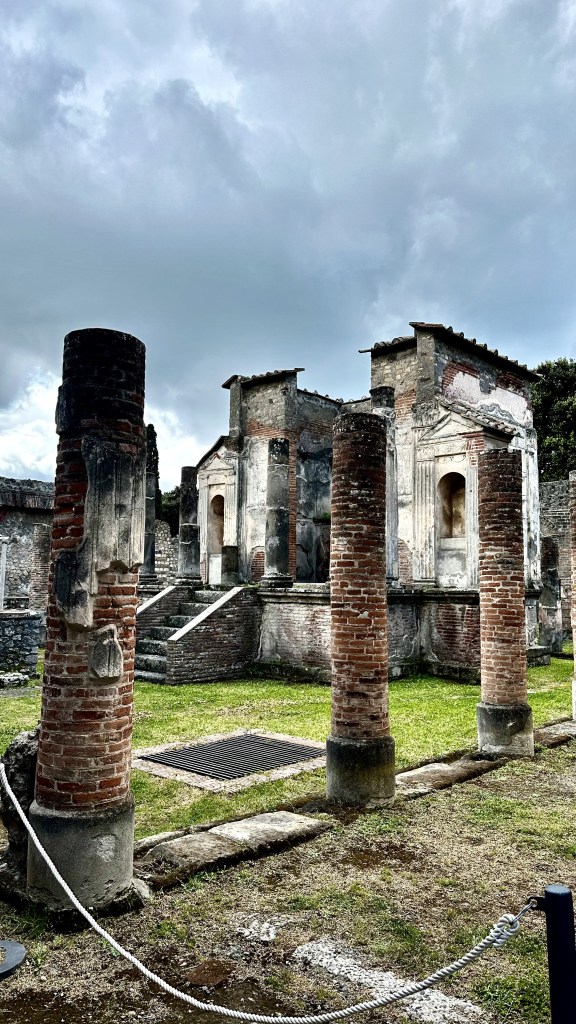
It was incredible just how much Pompeii was preserved beneath the ash and what archaeologists were able to uncover, and even more incredible to learn that only two thirds of the city have been excavated. We roamed the narrow cobblestone streets, alight with wonder at just how advanced the Romans actually were 2,000 years ago in this proper town, alight with sidewalks and grid patterns. We passed a “downtown,” villas with fashionable courtyards, Terme baths, bakeries, temples, the Forum, a theater and an amphitheater which boasts the oldest among those known– including Rome’s Colosseum. Crumbling, colorful frescoes, to intricate floor mosaics of animals, sacred geometry, or labyrinths, to diamond patterned tiling and brickwork, statues, decorated columns, two-story facades, fountains . . .
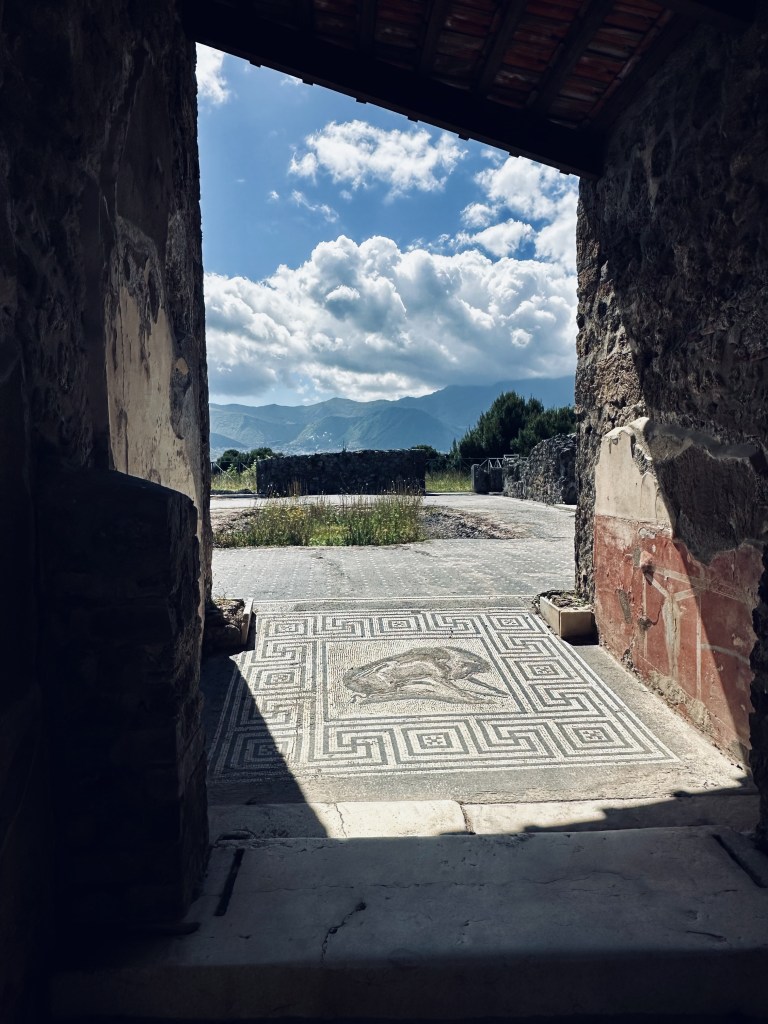
The whole morning was a jacket-on, jacket-off, kind of confused weather mood, and midway through our roaming, the sky started sprinkling, which then quickly turned into hailing! Luckily, we were able to duck beneath the tiniest piece of shelter in the villa’s courtyard while waiting it out. Four hours later, we still hadn’t seen all we had wanted to see, (that should give you perspective of how immense the place is) but with aching feet, and grumbling bellies we threw in the towel and ventured back to Napoli.
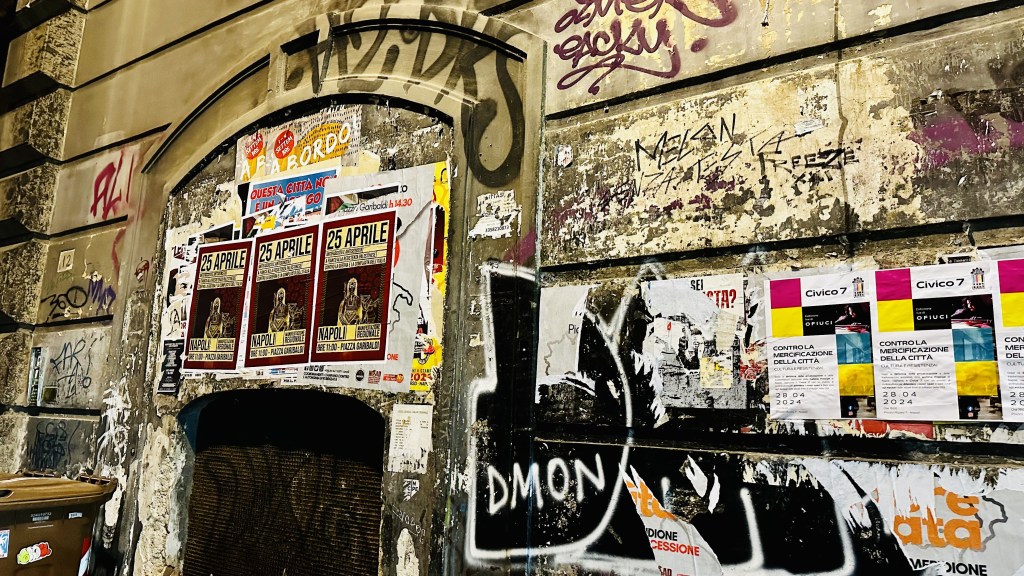
Tramping along the city streets I was perhaps beginning to see why Napoli wasn’t claimed by a majority of Italians. A different flavor peppered the air. A musk, one which took me back to stale streets of southeast Asia. This city had a grunge to it. Gritty, you could say. Overflowing garbage bins lining streets, graffiti everywhere. Noisy and chaotic, these streets held the soot and splendor of a proud people. A people with edge, brusqueness. Lacking tact and “fogettabout” poise. Piped up on espresso sludge, their fire cannot hold itself back. Laughing with the shopkeeper from our communicating attempts at broken Italian/ Spanish, he reminds me that their language is not Italian. It’s Napolitano. Proudly.
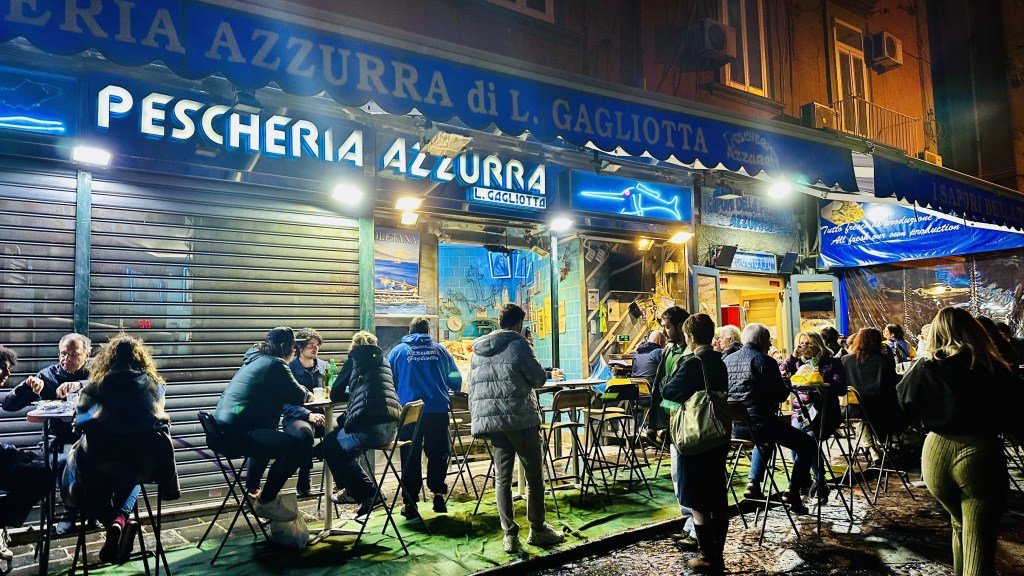
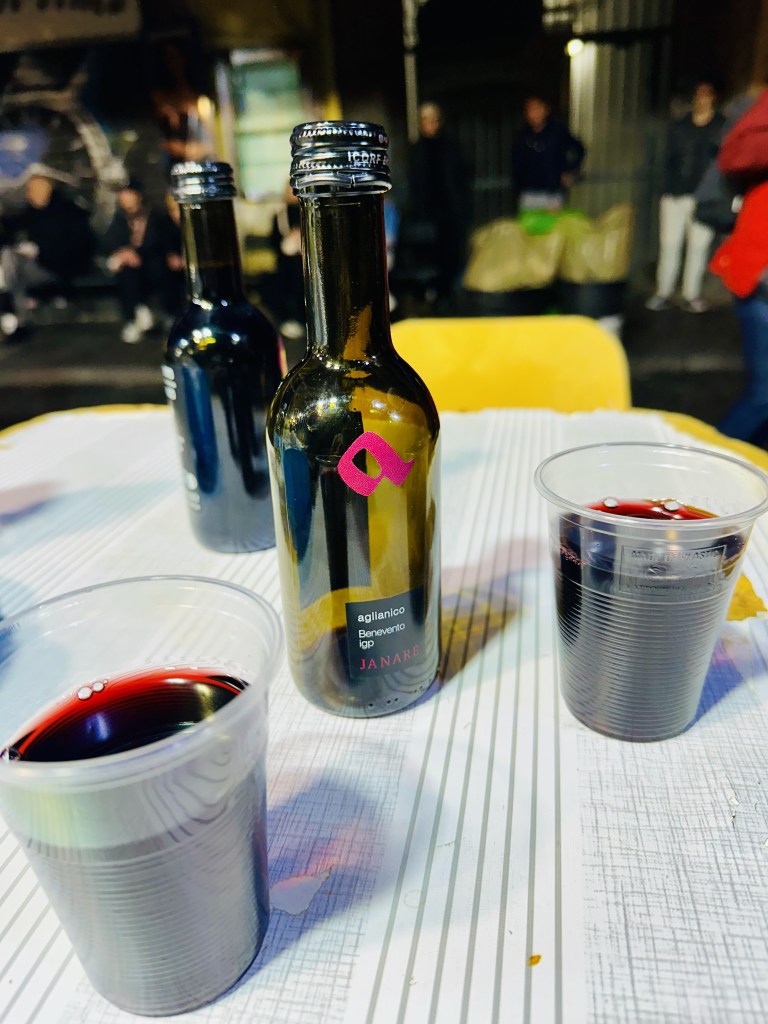
For dinner, thanks to a recommendation from a Captain friend, we found ourselves at Pescheria Assurra, a true, local seafood market restaurant, hidden away on a bustling street in Old town. Neon white and blue lights revealed the narrow stall of freshly splayed seafood, complete with googly eyes, and antennas. We were seated at one of the wobbly barstool tables crammed onto a sidewalk topped with withering Astroturf. Our vino Rosso came in mini, screw-top bottles, with plastic cups to drink from. Soon we were sinking our teeth into an assortment of fresh fish, prepared simply with lemon and garlic. Next came our basket of fried mixto goodness which we had seen a majority of the locals stopping in for.
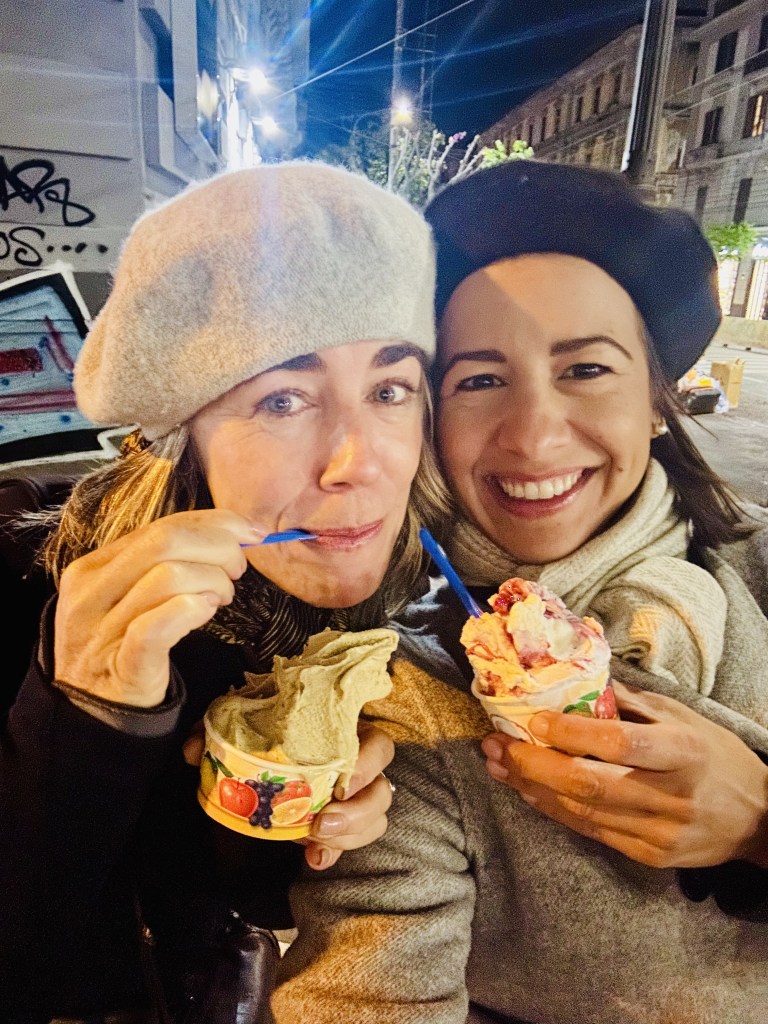
No virgin evening in Italy would be complete without a gelato dessert night cap. And so, I popped my cherry, Amarena style. Maybe it was set and setting and maybe it sounds predictable, but it was the best gelato of my life. And when my friend couldn’t finish her mountain of pistachio gelato–the round laughing woman had over-scooped–I finished hers.
Ischia
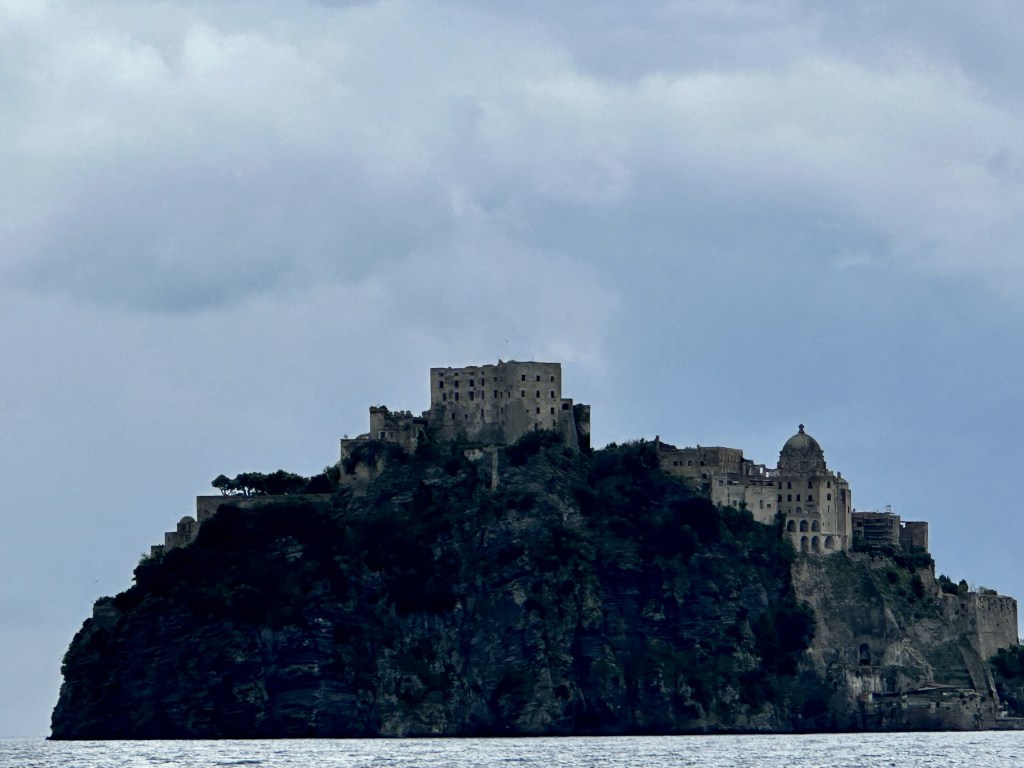
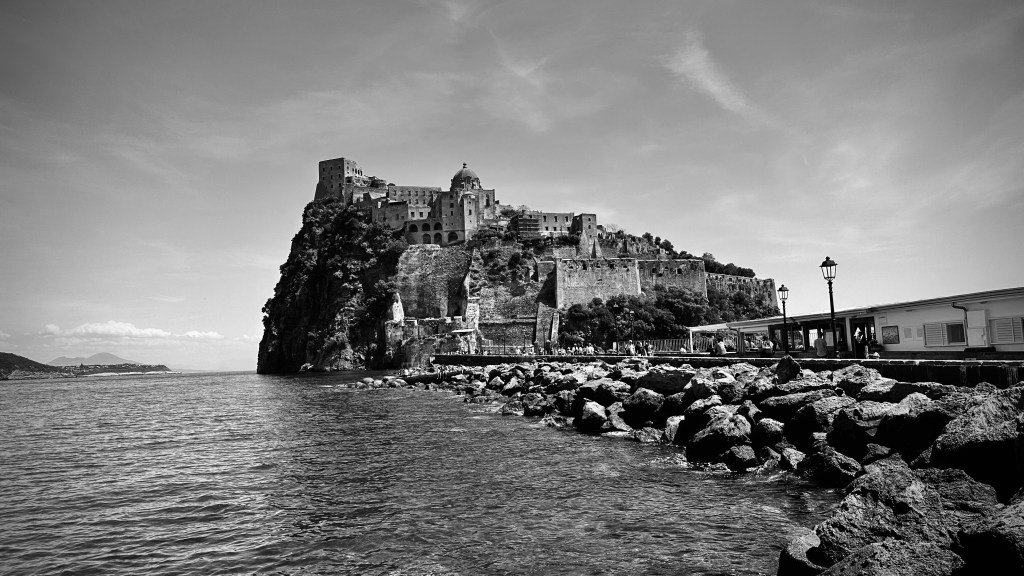
The next morning, we took the fast ferry to our long-awaited island of Ischia. Dark clouds loomed overtop, but she was still a sight to behold, and it only made the medieval Castello Aragonese, (dating back to 474 B.C.) stacked on a tiny islet, look even more enigmatic.
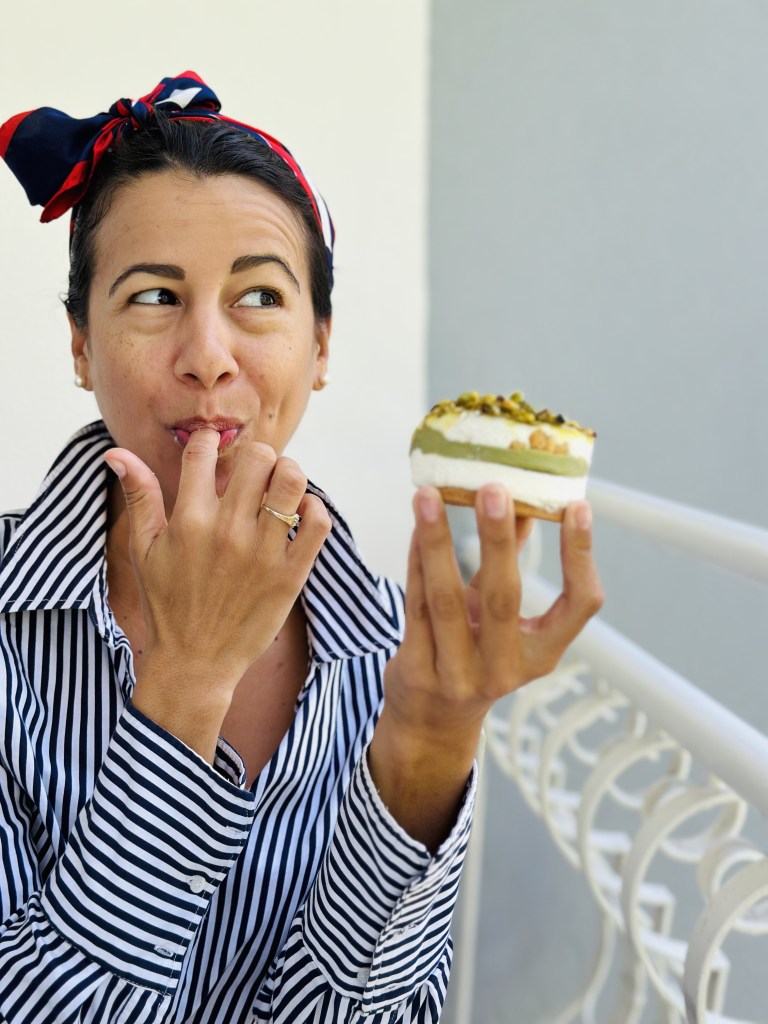
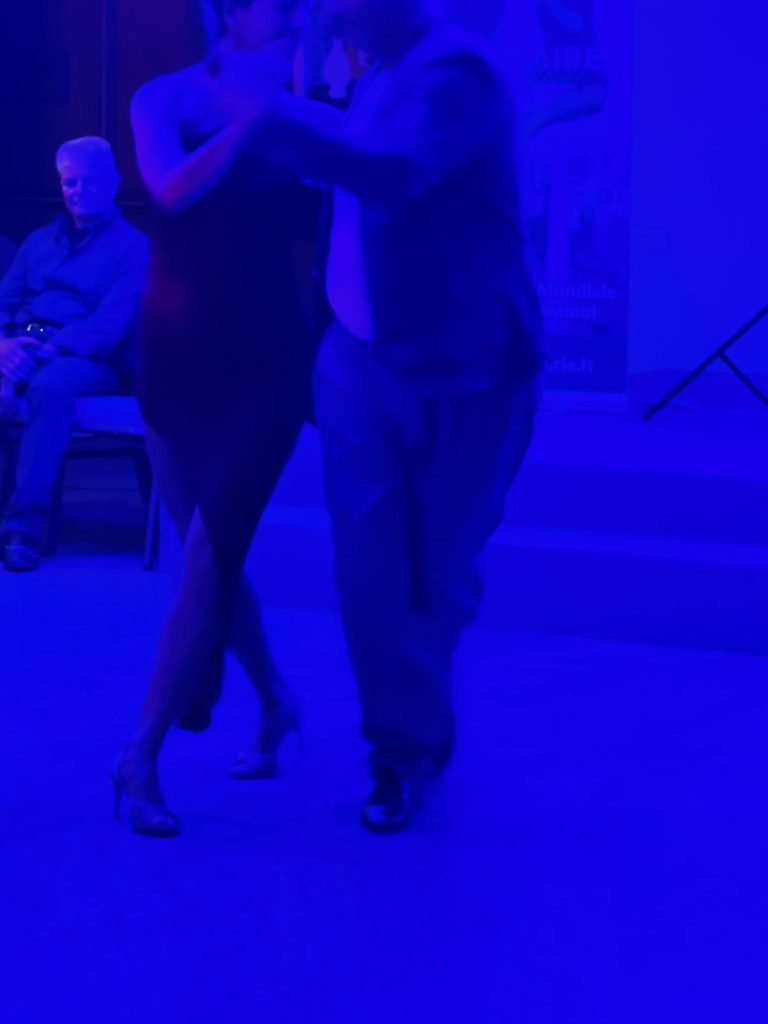
Tango workshops, terme spa, lunch and wine, siesta, four course served dinner and wine, milonga, repeat. For three days we danced our feet until throbbing and later rejuvenated in the Spa’s Turkish bath, sauna, cold plunge, and salt room. My friend and I laughed at ourselves when we found out the whole festival and workshops were spoken and taught in Italian. But the people were warm and inviting, and in the end the language was so close to Spanish, that we managed just fine.
Everyone in attendance was Italian, minus one woman, our new friend Cici from New York, who had relocated to the island retracing her Italian roots. One evening at dinner, over a couple bottles of Ischian Falanghina, I was truly touched by the stories this woman shared with us of her life there.
“Each day the family has lunch together,” she recounts. “Nonna prepares the meal. Usually, a pasta with whatever is fresh from the garden that day thrown in there. Once the plates are clean– meaning you’ve sopped up every last drop of sauce with the fresh bread– there’s usually a second course hiding away that Nonna pushes on you. Then when that’s done you’re guilted into dessert. Everyday there’s wine– even if it’s just in small proportion. And not just any wine– it’s family wine. Grapes grown on our land, stomped by all of us family members, then bottled for aging. Everything is done together as a family. We’re each given our role to carry out. When all the tomatoes are ripe, they’re picked, then sorted through, canned with basil leaves, and brava– you have sauce for the year.”
She delighted telling us how everything is fresh, that the island hardly imports or has the need to. As she put it, when it’s strawberry season, you eat gorgeous delicious strawberries, and when it’s over– that’s it, no eating off season. Not how we’re used to it in the States where any fruit or vegetable seems to be available year-round.
Lastly, throughout the island the Sunday tradition is to have local rabbit, Coniglio, braised in a white wine sauce. This is too, when the weekday, small portions of wine up level into whole bottles, and an assortment of pastries and cakes are bought specially from the local bakery.
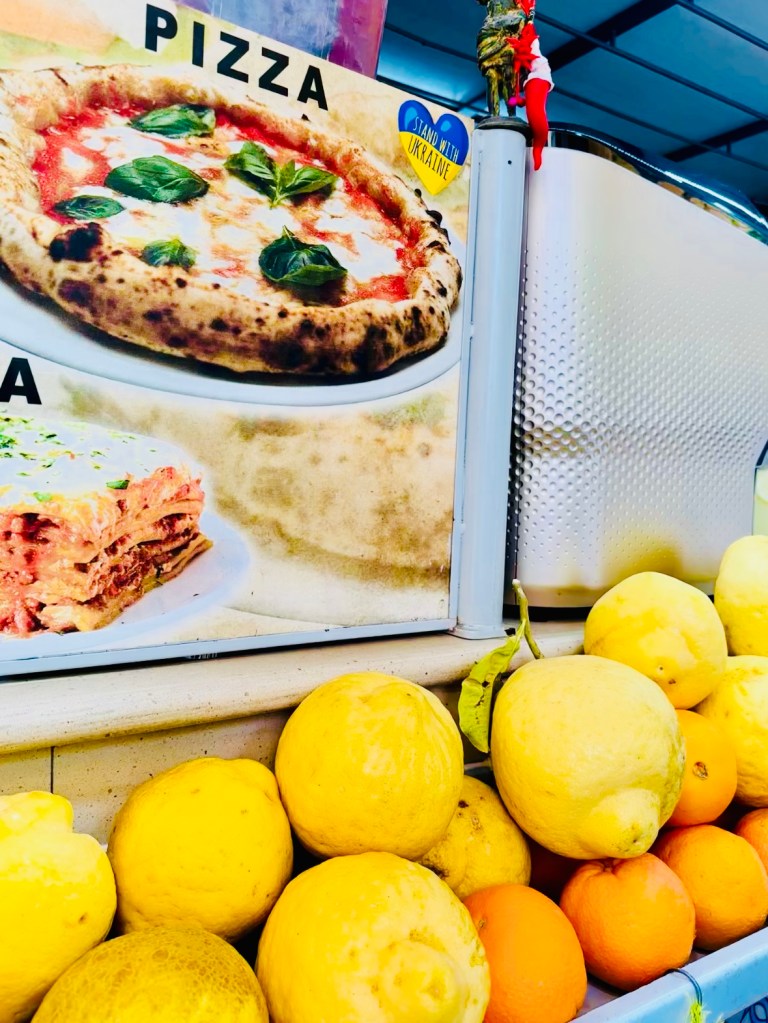
It was the day before we were set to leave so we decided to skip the workshops and go explore a bit of Ischia town. Tummies rumbling, we only had pizza on the brain. Well, it must have been that kind of day where all the stars had lined up for us. Tucked away off a side road the pizzeria looked like a casual outdoor garden. Tables sat staggered, topped with charming red and white checkered cloths, and worn-in, rod iron mismatched chairs. Place settings were complete with quintessential Italian, idyllic motifs, of blue and yellow, hand-painted on drinking glasses, and plates, each with their own design, and atop a sticky charger. Eros Ramazotti’s nasally tone streamed through the speakers next to the potted hanging flowers and an incongruous chandelier. Miniature, loaded lemon trees burst from tall, terracotta urns.
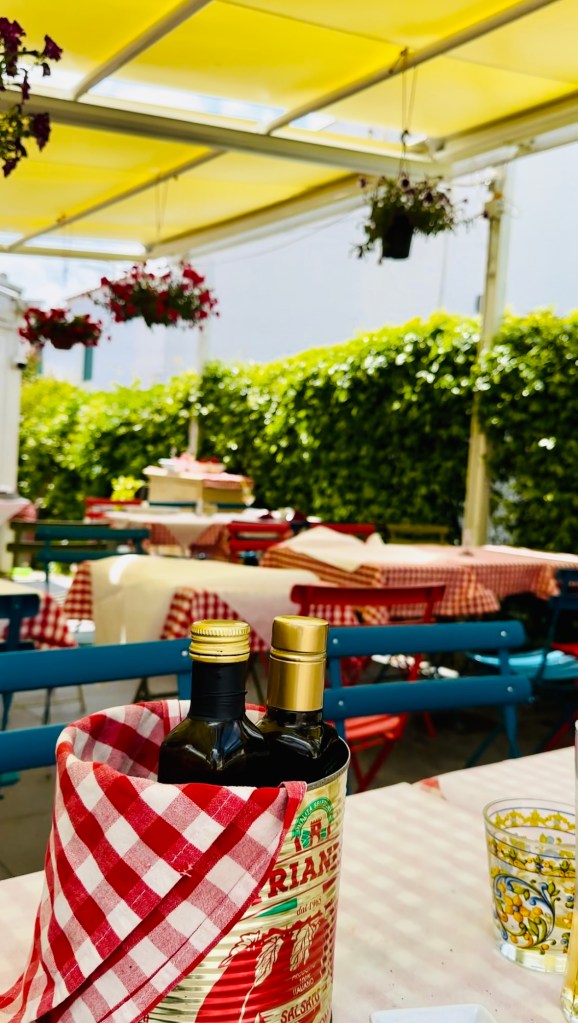
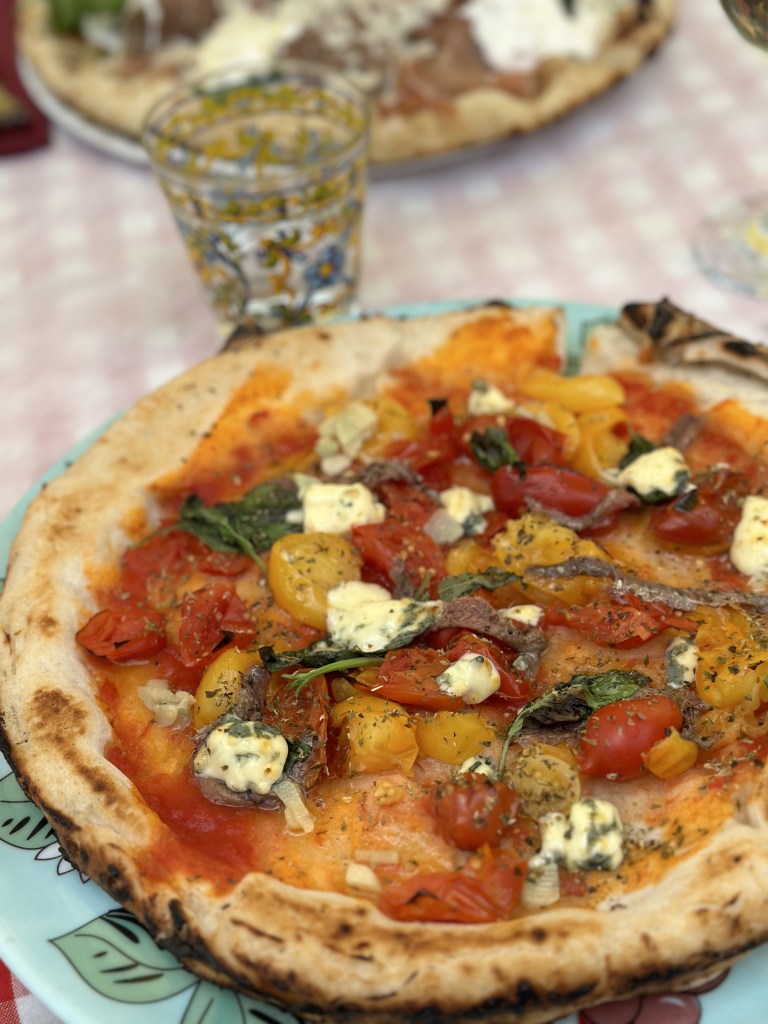
We sipped on a local white, enjoying the ambiance while we waited on our pizzas. The moment of glory… A red sauce with red and yellow cherry tomatoes, anchovies, garlic, basil, oregano, and globs of gorgonzola. A fat dollop of Stracciatella (the inside decadence of a burrata), gloating in the middle. The waiter brought out the oil and vinegar bottles– a recycled, vintage looking, roma tomato tin can as its holder– and I finished off the pizza with a proper drizzling. The crust was sheer magnificence. A magic gluten-free recipe, with tongue-tickles of sourdough. Perfectly, imperfectly charred at its border, crisp on the outside and softness on the inside. A flavor only a seasoned wood-fired oven can embellish. I hate to throw out that “best” phrase again, but this was indeed the BEST pizza I had ever put in my mouth.
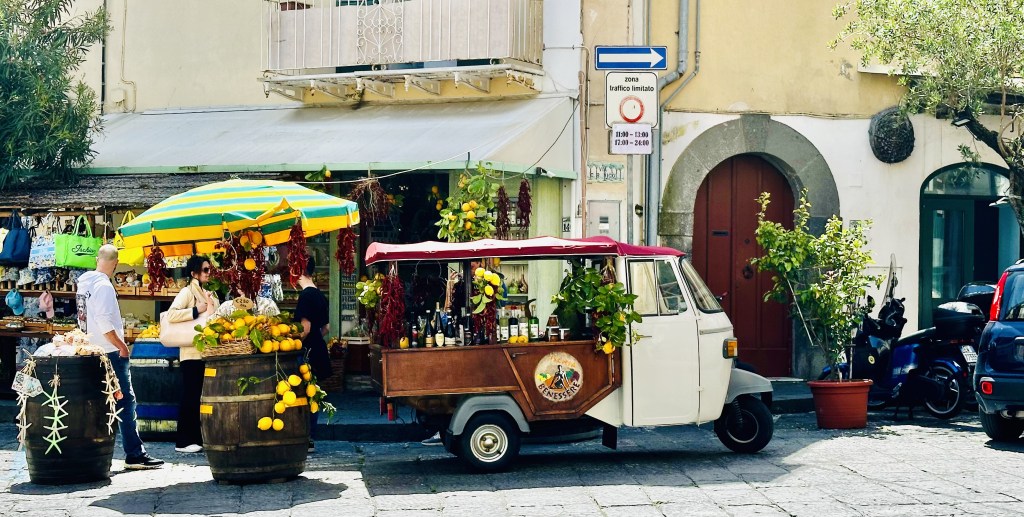
Southern Italian culture–like any culture really–shouldn’t be defined with general terms, but if I had to give my perspective or punch out a few words, I would settle on, expressive, passionate, and fiery. Similar to Spanish warmth, yet distinctly, proudly unique. With no clear sense of following, Southern Italy does things their way, gritty streets and all. Value is kept on family and thankfully kept on exceptional pizza and gelato.
We Do the Tango

Sultry sweet
  the way you move your feet
beat, beat, beat
  a show to dance such heat
turns and sways
  grooves and moves
wrestled free from dancing hips

The way you show your
 		appetite
Satiate me
Give me the flavor
  unspoken yet carried.

A vision from your hands
  which guide and stream
the life force spewing within.
Turns and pivots so quick, so exacting
  we move like feathers
sweeping and carrying
  each other
to new dimensions
  which twirl and swirl
songs of great anima.
Loosening the grip only
  to come together again
embraced and cherished
  reading your speed
your quantumness
  its utter capacity.
A growing ember
  flavored with poignancy
which seasons its caress
  with each coming measure
beat, beat, beat
  the way you move your feet.

Growing, waning
  exhausting, yet filled
lifted to the brim
  with which we swim
through water of life
  the air, our sphere
has become one
  has become all
sensuous and drifting . . .

Staccato melody
Exude your tier
Play me a measure
  which binds and grinds me
to the floor below
  so clenched, so slow
we glide and slide
  a new rhythm
our rhythm
    Bade say goodbye
Discover more from Christin Marie Writes
Subscribe to get the latest posts sent to your email.

 Christin Marie Writes