
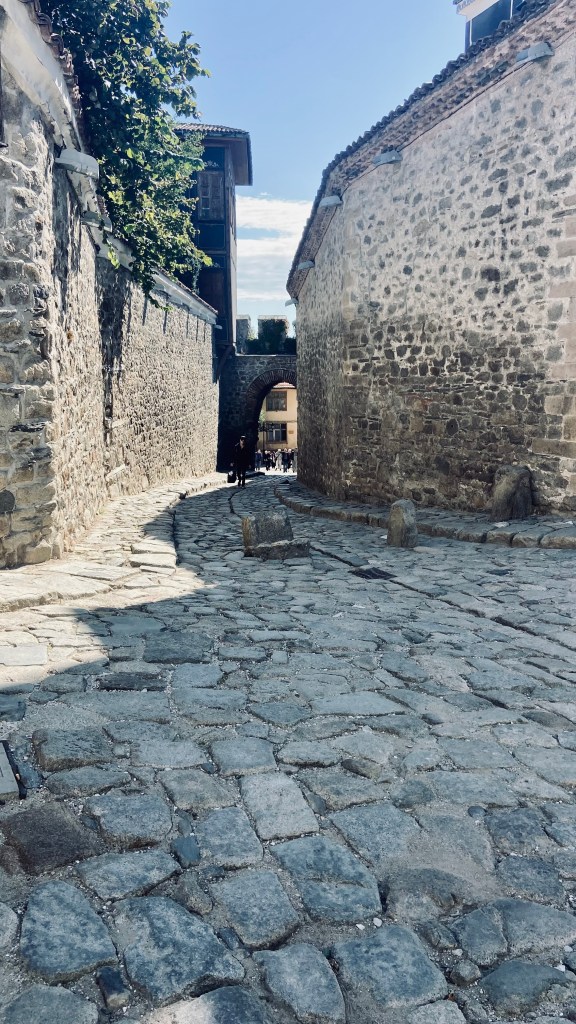
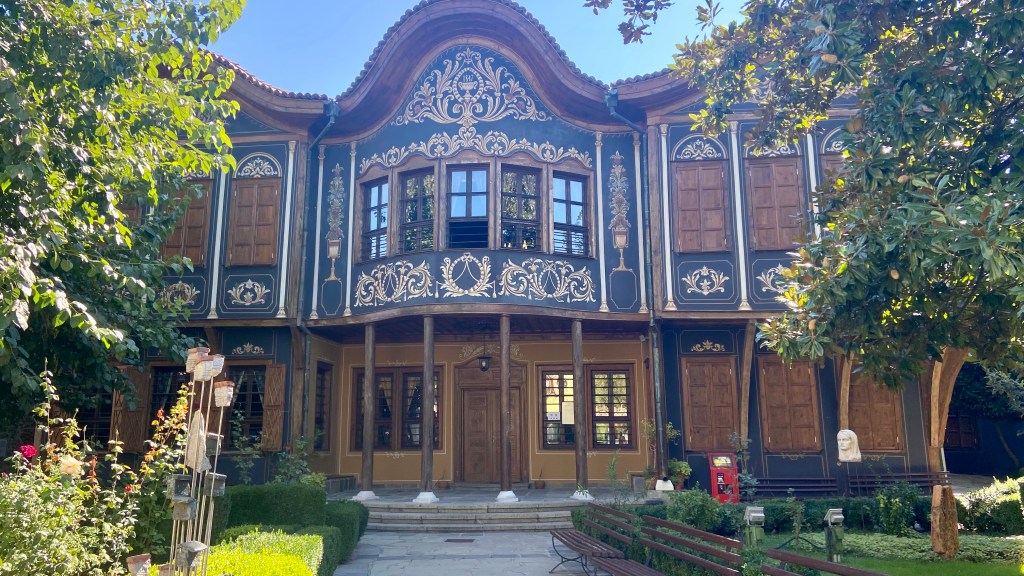
The second half of the Bulgarian adventure leads us southeast of Sofia, to the country’s second largest city, Plovdiv, which is actually the oldest continuously inhabited city in Europe! It dates back with habitation in the area to a remarkable 6th millennium BCE! Pretty rad. We strolled along aged, grey cobblestone streets, a fresh chill in the air, and a slight breeze that blew tree leaves dappled by golden sun rays. You could definitely feel the richness of this place, a source of history and a wealth of integrity. Encoded. Just walking you can come across many wonderful architectural sites, such as the ancient stadium, or the city’s ancient Roman theatre, constructed in the first century AD, as well as a more modern beauty, the ethnographic museum, a house built in the mid 1800’s, designed in Bulgarian Baroque style.
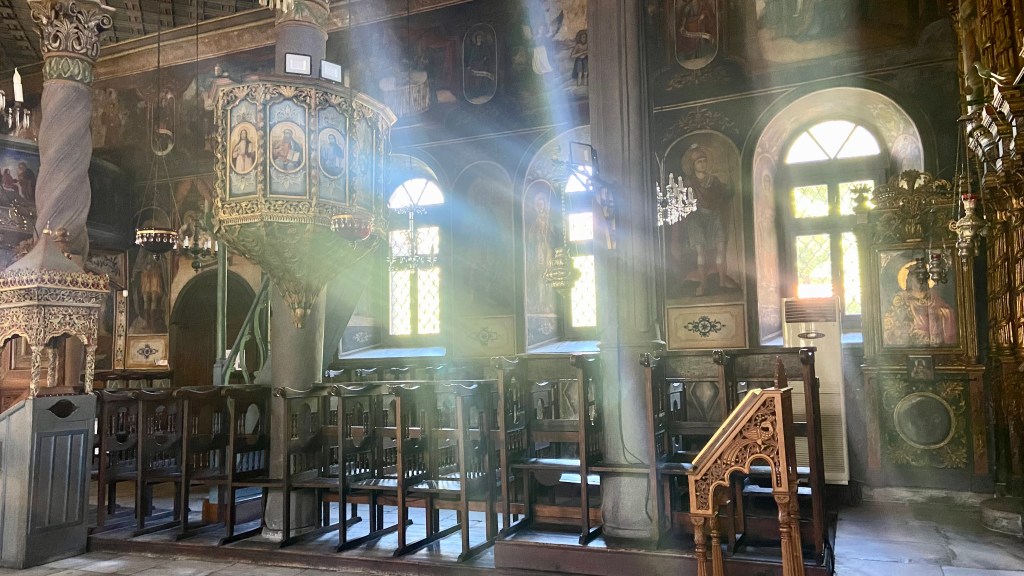
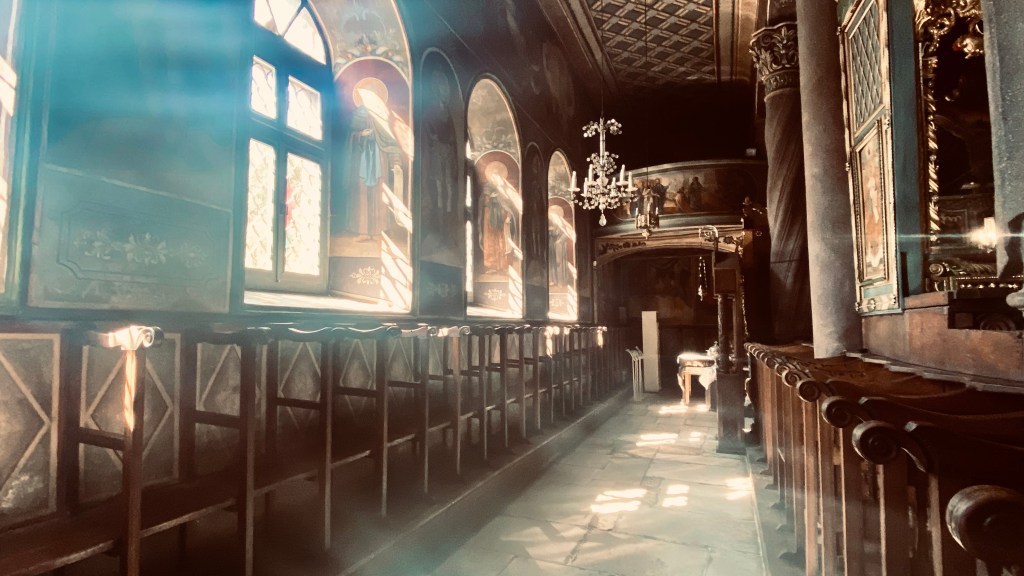
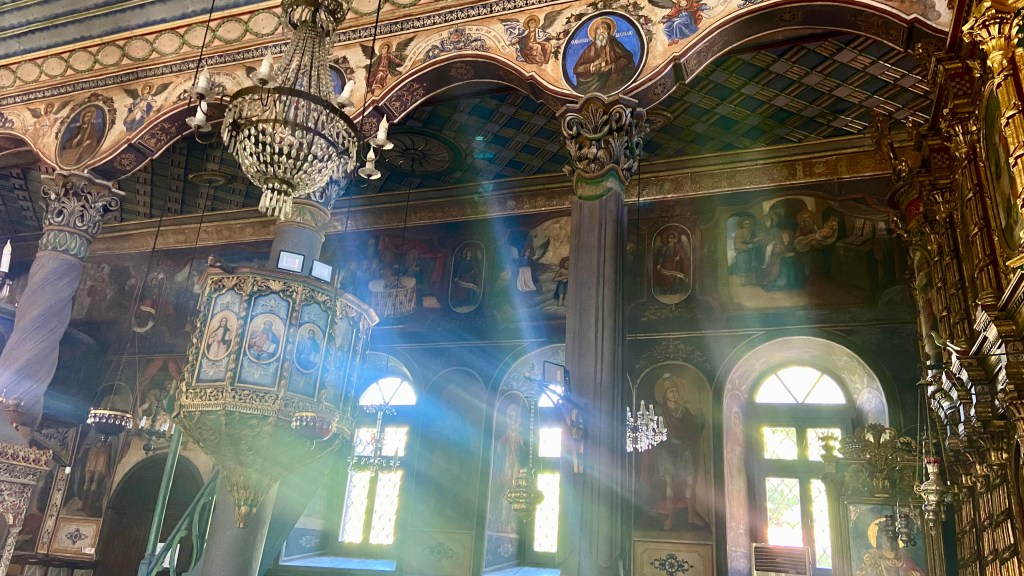
One place that really drew me in was a church, St. Constantine and Helena, first built in the year 337, currently showcasing its many upgrades and additions. For me, there was something really special about this place. From the moment I entered, I was captured by the light quality filling the space, amidst dark, mildly ornate, carved wood. The church sanctuary felt readily mystical, as if something holy was going on just behind the veil. Large rectangular windows, capped with semi-circular dome arches, lined the far wall, and sunlight poured through in diagonal bands, like spotlights, tinged in blues and greens, painting the pale-grey, stone floor in squares of light cast of the glass’ beveled crosshatches. My eyes traced the walls, taking in the floor to ceiling, dark-toned frescoes of painted icons. I marveled at the altar’s golden ornamented façade, showcasing more magnificent painted, haloed idols, tributed to Jesus, Mary, Mary Magdalene, and numerous other saints. I’m not a churchgoer, but this place sung of the sacred, and that enigmatic essence, with all its history, resonated within me. I could hardly believe the photos I was capturing.
We hopped in Mira’s Mini Cooper and off we were to the town of Lozenets, a seaside town situated on Bulgaria’s eastern coast, near the popular summer destination of Burgas. Mira had found a glamping site for us to rent for the week there on the edge of the Black Sea, with converted camper vans turned into cutely decorated tiny houses with porch build-outs. The Black Sea is the very one that also connects with Ukraine and Russia, and indeed, from a distance, does have a darkish hue to the water. Entering its waters in late September felt like submerging into a cold plunge– scary going in, but once you come out, you’re actually quite warm and are left feeling invigorated.
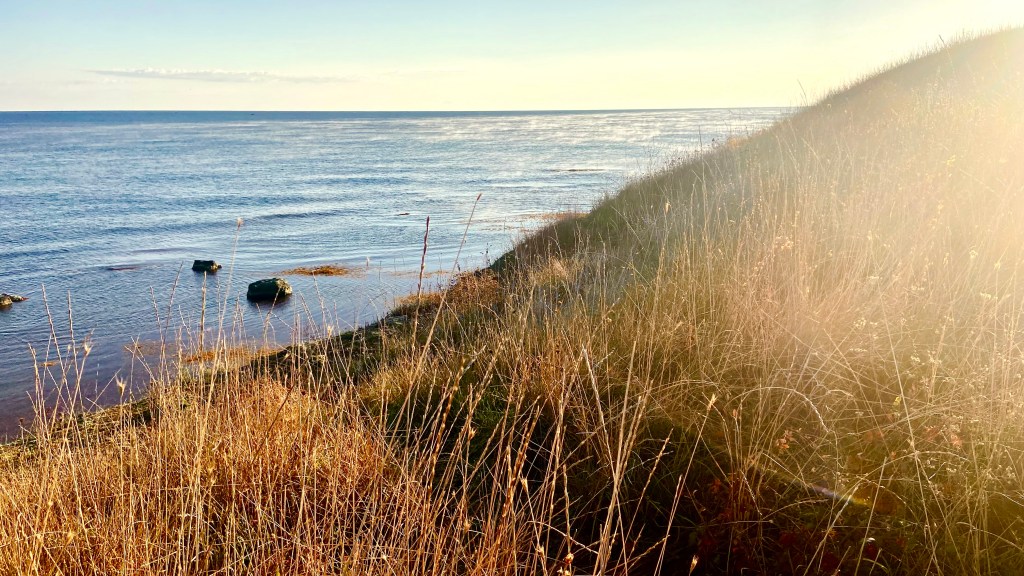
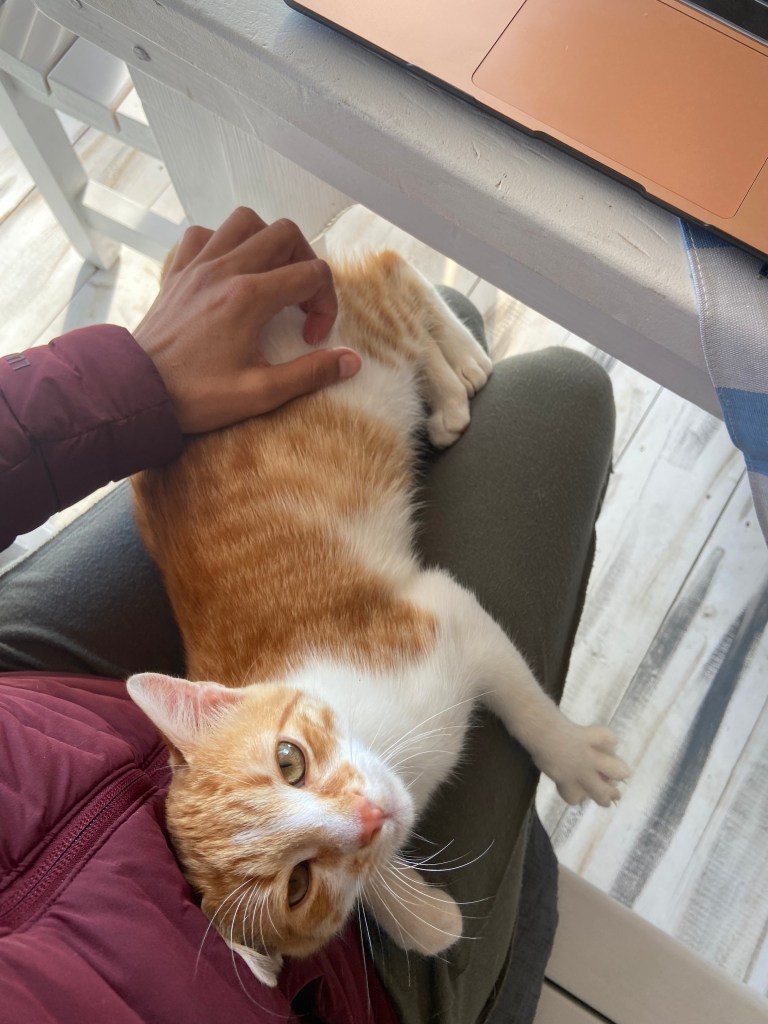
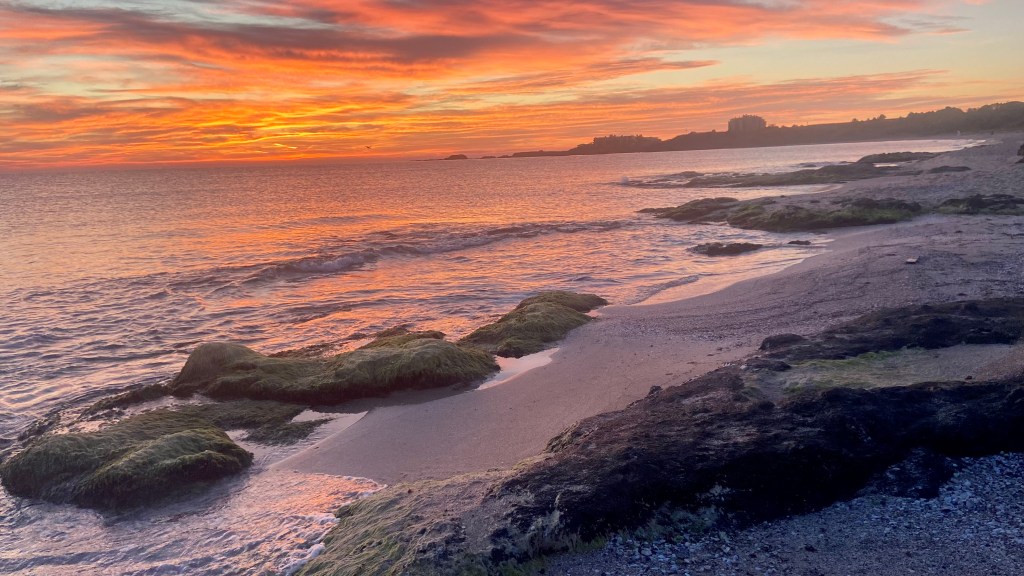
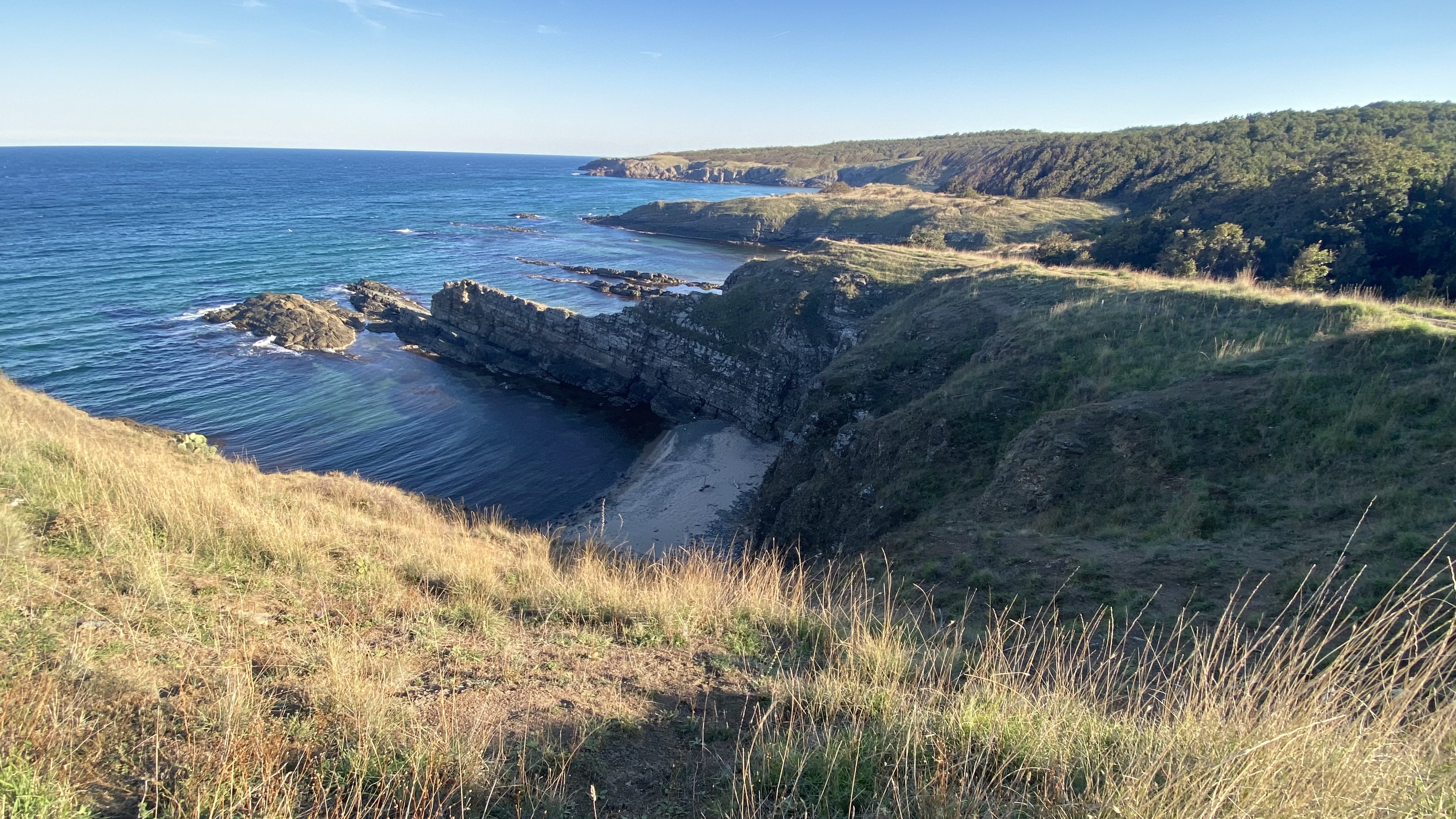
Our space was quiet and peaceful, hardly anyone was there, as the exciting summer months had come to a close. I spent almost every morning or evening jogging the rugged coastline, marveling at the unexpected beauty around me, delighting in the sun rising out of the water, welcoming the day, or the colors painting the sky, donning the approaching darkness. During the days we both worked diligently from our quiet space, finding ourselves in a productive and creative flow. By day two an adorable, teenage, ginger kitty with white patches and green eyes, sauntered into our space. Me being a complete mush for cats, immediately fell in love with his affectionate, calm nature. By day 3 he had adopted us, and Ging & Tonic (so we named him) became our son, even winning over the non-cat lover Mira. He loved nestling in to one of ours’s sides, purring sweetly like a little machine, and I would often work from my laptop with him curled up in my lap.
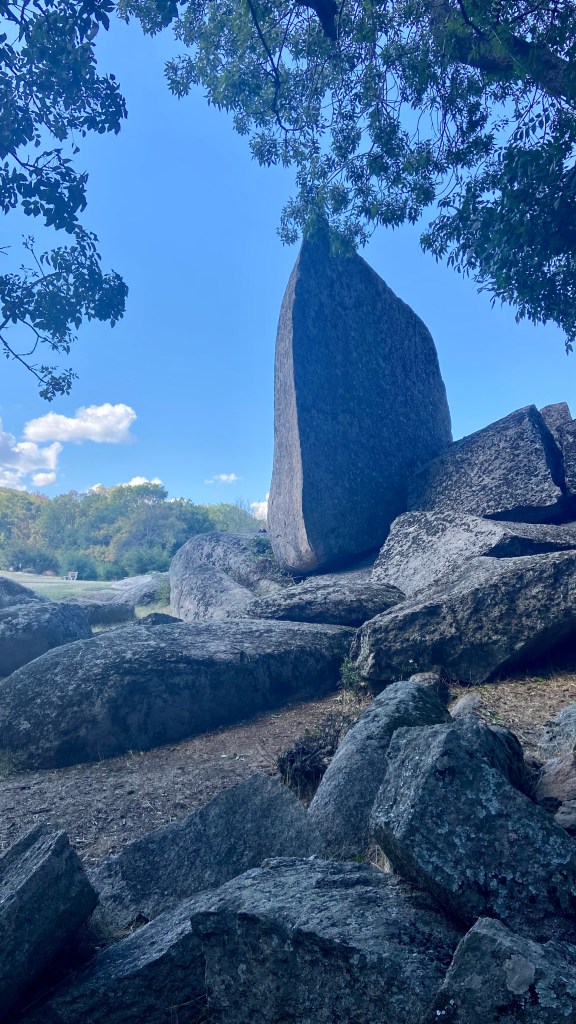
In my Bulgaria post part I, I spoke of a book I had owned, The World’s Most Legendary Places, and in it was this next place…From Lozenets we took a day trip to Beglik Tash, a prehistoric stone complex made of “natural rock-formations consisting of megaliths of hardened magma that erupted from a Mesozoic era volcano.” {Wikipedia}. In Part I, I also spoke about encodings and how I had gone down a rabbit hole centered around ancient humanity and their connection with the “architecture” of the planet and universe. Well, this place certainly satisfied as wholesome rabbit food. Talk about ancient. Graham Hancock would certainly enjoy this place. Different megaliths were labeled and purported to their designation. One was a sun dial, another a womb cave, another a giant phallus and another fashioned into an altar. What was clear was that some major devotion took place in its day; spirituality was woven into the fabric of the peoples that inhabited its realm, and they, like many ancient advanced civilizations, understood the connection to the stars– exemplified in rock cut outs engraved in stone floor, mirroring the design of Pleaides. This place definitely had a slow stream of tourists visiting its rock sanctuary and it proves to me that peoples’ curiosity and understanding of something beyond us is indeed imprinted in each of us– whether subtly or palpable. What kind of encoding was practiced here, I wondered? They clearly honored the divine masculine, the divine feminine, and fertility:
“Archaeologists have found ceramic artefacts from the Early Iron Age (10th–6th century BC), classical antiquity, and the Middle Ages, as well as a man-made stone altar at the end of the natural cave which proves that it was used as a place of worship. Every day at noon, a ray of sunlight enters the narrow entrance of the cave, and projects itself on the back of cave. According to the Bulgarian archaeologist Alexander Fol some of the Thracian womb-caves had the property of letting the sunlight in only at certain times of the day, a natural phenomenon seen by the Thracians as acts of symbolic fertilization of the Earth womb or the Mother Goddess by the sun phallus of the Sun God.” {Wikipedia}
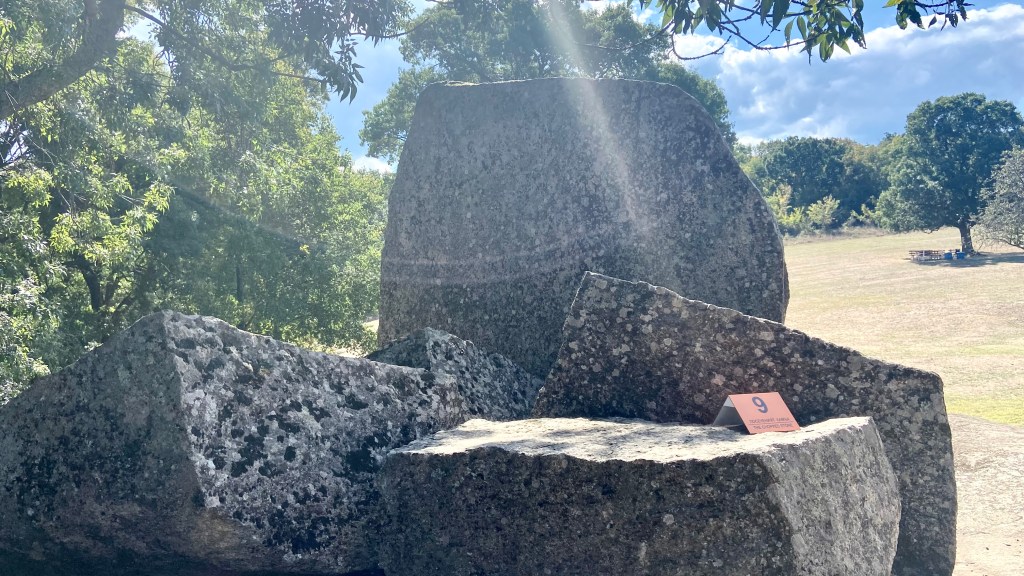
We meandered through the sanctuary and towards the back where there were no roaming tourists. Each of us found a suitable boulder, then made our way into meditation. The energy here was quiet and serene. The warm afternoon rays shone down, mingling among the cool, crispness of approaching Fall. My skin rippled with aliveness as my senses filled and attuned to the frequency of the place. I was here. Mixing with the presence of the ancestors. I remember feeling this way during particular hikes when traveling America’s Southwest, on sacred Native American land. The presence of the Natives, their love for it, and even their laughter still resonated with the land, and this place blew with echoes of its people. I felt it in Greece, walking the Acropolis at sunset, and on Crete when I explored the ancient Minoan ruins scattered throughout the island. During my time in Croatia, I had been granted the experiential insight of understanding how when you visit a place, and openly, you connect and align to it, you will in turn take on the place’s frequency– forever bear it. For me, it felt like adding a vibration of a place’s essence to my inner “basket of fruits,” and resonating it from then on. So too was I doing here at Beglik Tash, and had done in Plovdiv, and Sofia. I was open, and the codes were coming in all around me. Exhale. Perhaps this is what it meant to be encoded.
Discover more from Christin Marie Writes
Subscribe to get the latest posts sent to your email.

 Christin Marie Writes
What a beautiful outlook on life you have! Thank you for sharing!
LikeLiked by 1 person
thank YOU for sharing!
LikeLike